Description
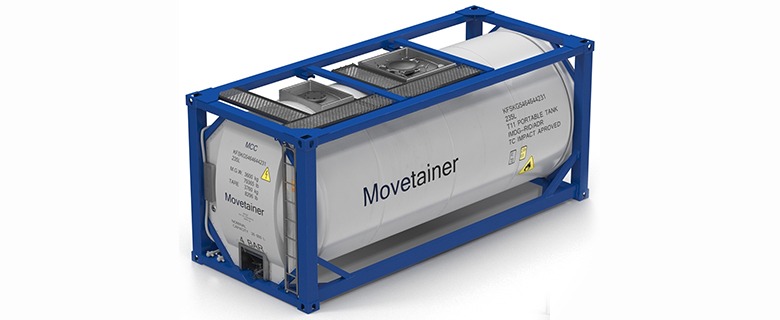
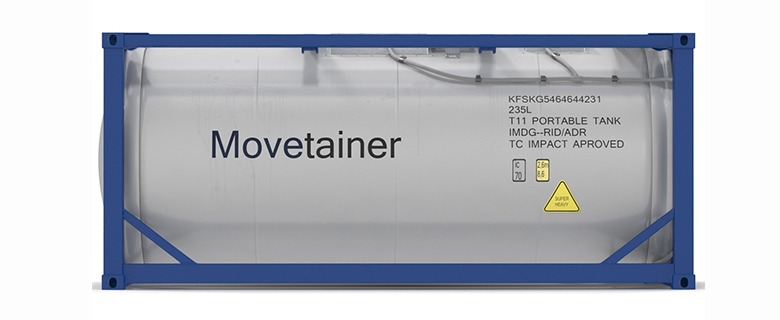
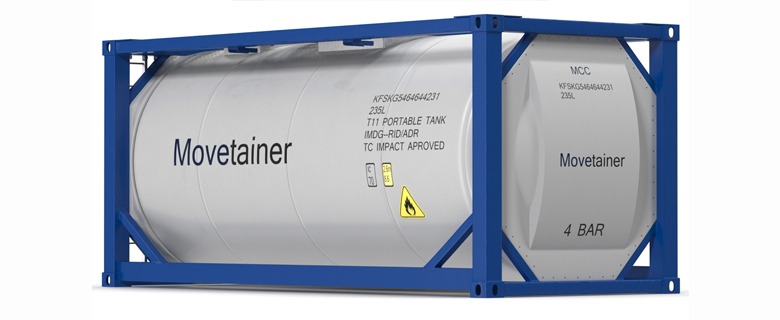
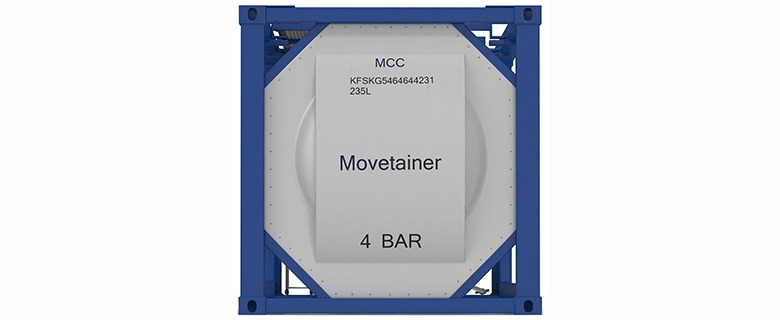
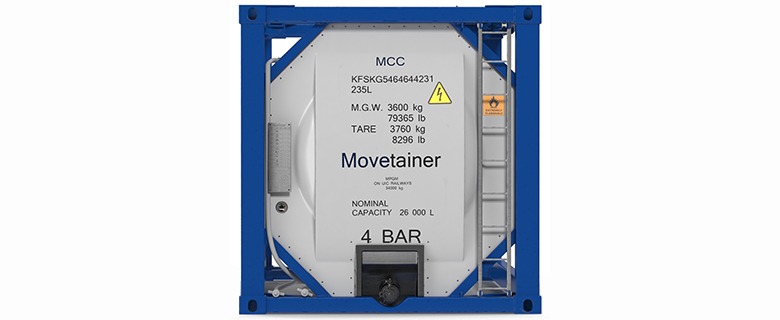
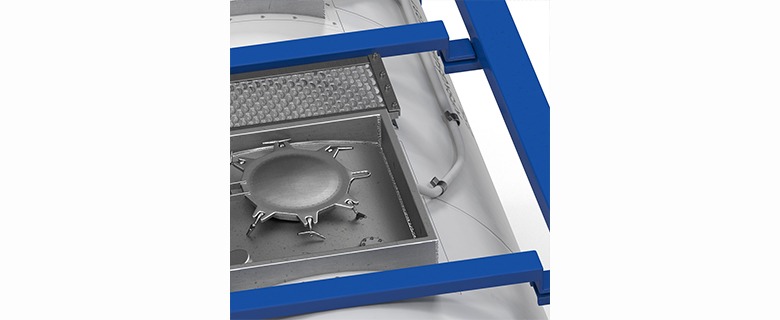
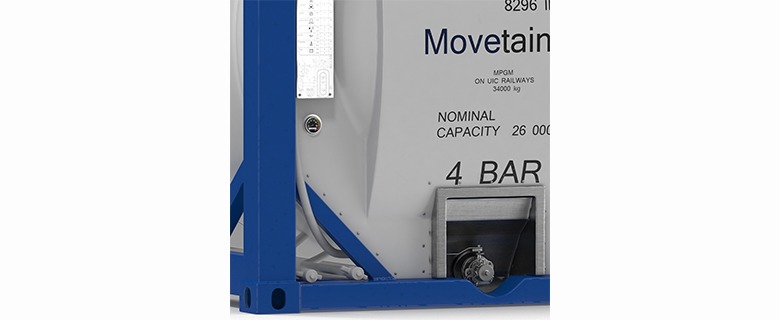
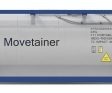
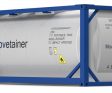
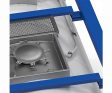
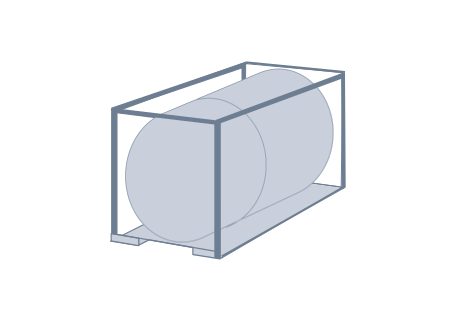
A tank container (20 feet tank container) is a multimodal transport unit designed for transportation of liquid chemical and food products, as well as liquefied gases by three modes of transport: sea (river), rail and road. Transportation in tank containers is performed according to the door-to-door technology without intermediate transferring of the product when changing the mode of transport, that ensures increased safety of transportation and the safety of the transported freight. The use of tank containers allows you to optimize logistics operations for the transportation of liquid chemical and food freights, as well as liquefied gases due to the lower cost of the railway tariff compared to transportation in tank cars. An additional advantage is the ability to quickly transfer tank containers from one mode of transport to another, excluding the reloading of products at the bulk terminals. The main manufacturers of chemical and food tank containers are CIMC (China), Van Hool (Belgium), Welfy Oddy (South Africa), Uralkhimmash (Russia), Uralkriomash (Russia), etc. Basically, tank containers are made in China. The world leader CIMC produces almost 60% of the world’s production. Almost all tank containers are made on the basis of a 20 feet container frame. Tank containers based on a 30 feet frame are almost never produced. 40 feet tank containers are rarely produced and usually used for liquefied gases (LPG, LNG). The main standard sizes of tank containers: standard 20 feet tank container has a capacity of 14 thousand liters to 26 thousand liters. The most used are 26, 25, 24 thousand liters. For heavy liquids — 21 thousand liters and less often — 17.5 thousand. SWAP containers have an increased capacity — from 30 to 36 thousand liters. SWAP containers have standard 20 foot frame, width and height. Depending on the capacity, the length can be 7.15, 7.45 or 7.82 m (not used for transportation of goods by rail due to non-standard dimensions). Gas tank containers usually have a capacity of 24 thousand liters, pressure — from 15 up to 34.5 bar. For classification, the old system was previously used (IMO-1, IMO-0, IMO-2, gas IMO-5). According to the Portable Tank Instruction there is used the T-code system — T1 to T75. The most common codes: T11 — 4 bar operating pressure, bottom discharge (analogue of the old IMO1), T12 — bursting disc, T14 — 4 bar operating pressure 4 bar, top discharge, T4 — 1.77 bar operating pressure, T50 — gas tank containers. Basic tank container design: with thermal insulation/or without with a steam jacket for heating with steam or hot water/or without with a siphon pipe for unloading by displacement with inert gases — in order to avoid contact of the freight with atmospheric air, a thermometer, a ladder, a walkway from above, etc., a tank made of stainless steel 316 or 304, or made of structural steel with internal coating for acids. Certification of tank containers is performed by classification institutions: Bureau Veritas, Lloyd’s Register, DNV, SGS or similar, as well as the Russian Maritime Register of Shipping. The rules for safe operation are detailed in “Safe Handling of Tank Containers” of the International Tank Containers Organization (ITCO).